In the Beginning
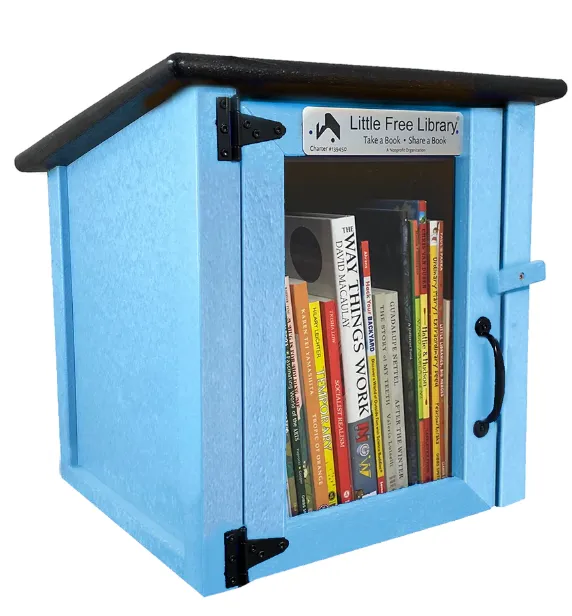
My friend Bob and his son Timmy are enthusiasts of the Little Free Library System. The idea is a network of DIY prefab cabinet kits in various models that sit on the front lawn adjacent to the sidewalk. In some ways its about promoting open literature by sharing books for free. Passers-by can borrow or donate a book and swap or return it when read. Read about the system here. We decided to use this project as an opportunity to automate. Of course.
Bob is quite technical and likes data and his 10 year old is the kind of kid who plays with Lego including building Lego machines that are programmed to solve rubics cubes.
Bob’s Library door has a contact switch and manual counter that increments to indicate number of times the door is opened. Our thinking was to work with Timmy and build a system that does the counting, reports it as well as other data like temperature and humidity and make it expandable to more data. We chose to use docker on a Raspberry pi and ESPHOME and HomeAssistant. in containers.
Highlights of the journey
This turned out to be a build happening at the same time I finally decided to dive into using a pay-per-use AI (Claude code). The experience was kind of mind-blowing. I had no idea these tools could be this powerful even for this small project. I spend allot of time in the typical trial and error of coding in ESPHOME yaml, making devices. Those earlier days of learning were enjoyable but it also often felt daunting to revisit the knowledge after long time gaps between builds. Now I can conceptualize and get some amazing code that both get’s me to the end result faster and enhances my learning.
The build
Like many early users of ESP8266, I had a few ESP8266 around which for a while were the goto Espressive boards but are now out of vogue and support. ESP32 is the new king. That said I am using up the ones I have and this project seemed a good use-case. We only needed GPIO’s for the DH11 (temperature, humidity), the OLED display, a contact switch, a wake switch. A0 is tapped into with voltage dividing resistors for monitoring battery voltage. The board runs ESPHOME yaml code and the monitoring and automation is through home assistant. For power it made sense to use solar and to do that we need a battery and BMS (battery management system). An excellent option is the DFRobot DFR0559 - with a boost converter from 3.7V to 5V, usb and direct power connections, solar charging and more.
The initial iteration worked in testing but the use of solar meant we really should know more about voltage coming from the panel as well as where the charging is happening if any. The DFR0559 has a USB direct battery charge option as well.
I also found the panel I was using was a bit slow to charge and the thought was to double up the panels and connect them in parallel for more power.
The A0 GPIO on the ESP8266 and related output can be a bit inconsistent when measuring voltages so we decided to take Claude Codes suggestion to use an ADC1111 board that uses I2C and is more accurate readings for voltages.
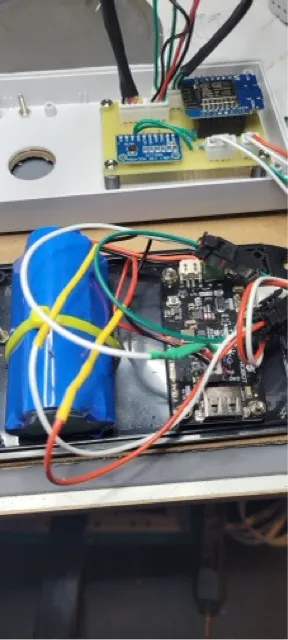
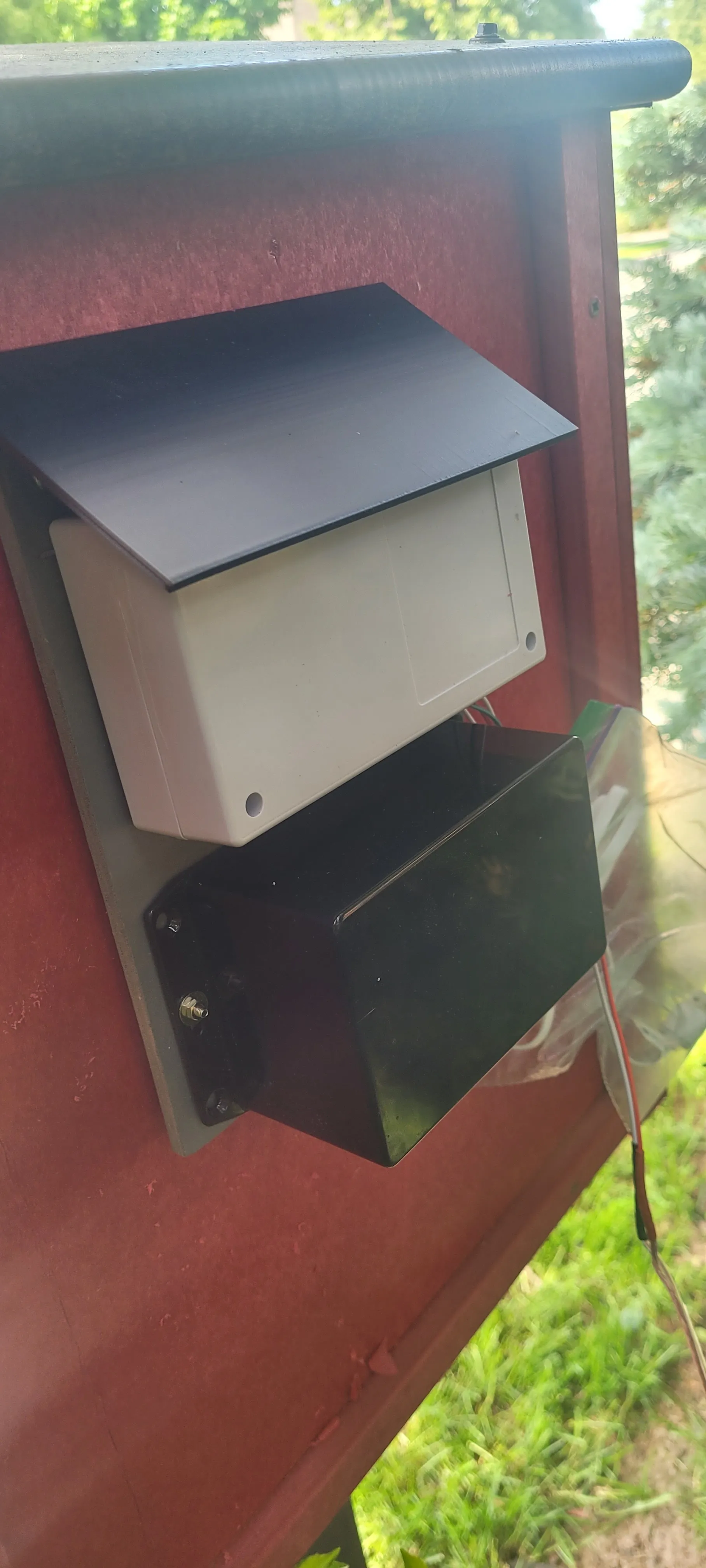
We decided it made sense to collect Solar panel charge, battery charge, humidity, door count and the state of charging or not charging of the battery. Bob and Timmy would then be able to play with all sorts of automations and dashboards on the HA side.
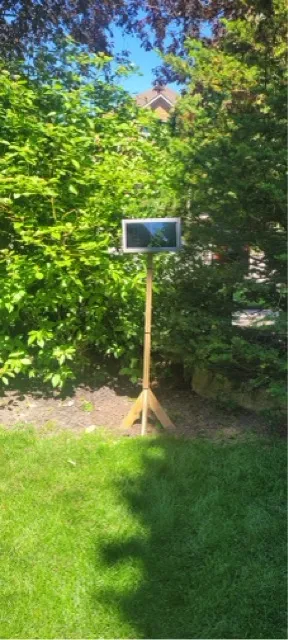
The mAh of the battery and our related power draw determines how long we will survive with little or no sun. We also decided to make our panel transportable to an area of maximum sunlight. So we just extended the pannel connections with long wires and enclosed the panels in a frame, allowing us to mount the panel where Bob has the most sun possible.
Future thinking
We have all kinds of ideas of how to make the system even more useful including possibly knowing what titles are being swapped back and forth in the Library. That seems like it might include image recognition and AI. But alas that may throw us into the cloud which is a bit of a controversy in the HA world.